
Criminal Court Cases in Scott County
Scott County criminal cases run through the unified Iowa District Court system in the Seventh Judicial District. District judges exercise general jurisdiction and try felonies. District associate judges hear matters assigned by Iowa law, including aggravated and serious misdemeanors and parts of felony proceedings. Magistrates handle initial appearances, simple misdemeanors, and preliminary work. Davenport, Bettendorf, and Eldridge do not maintain separate municipal criminal docket systems. Their ordinance and state-law citations ordinarily become Scott County District Court matters.
The Scott County Clerk of District Court is the case-file custodian. The general counter and the Associate Court traffic and criminal counter are inside the courthouse at 400 West Fourth Street in Davenport. The prosecutor decides what charge to file, but the County Attorney is not the docket custodian. This split is vital. An incident report describes police work, while a Scott County court file records the judicial action that follows.
Search Scott Cases in Iowa Courts Online
Iowa Courts Online is the main public index for a Scott County case search. It offers case, name, and judgment search paths. A known case number is the cleanest key. With no number, choose Scott County, enter the party name, and use the first or middle name to narrow common results. Name-entry rules matter, so a different spelling may be worth a second search.
These are the official search controls documented in the Iowa Courts Online help guide. A new case generally takes about one business day to appear after entry, then the case data refresh in real time.
| Field Label | Type | Required | Notes |
|---|---|---|---|
| Search type | Tab or choice | Yes | Case, Name, and Judgment Search are common paths |
| Case Number | Text | Conditional | Best key when known; codes may include FECR, AGCR, or SRCR |
| County | Dropdown | Conditional | Select Scott for local cases |
| Last or Business Name | Text | Conditional | Try careful spelling variants |
| First and Middle Name | Text | No | Useful to narrow a common name |
| Date or case type | Filter | No | Availability varies by search path |
The state search page shows the live interface captured for Scott County court research.
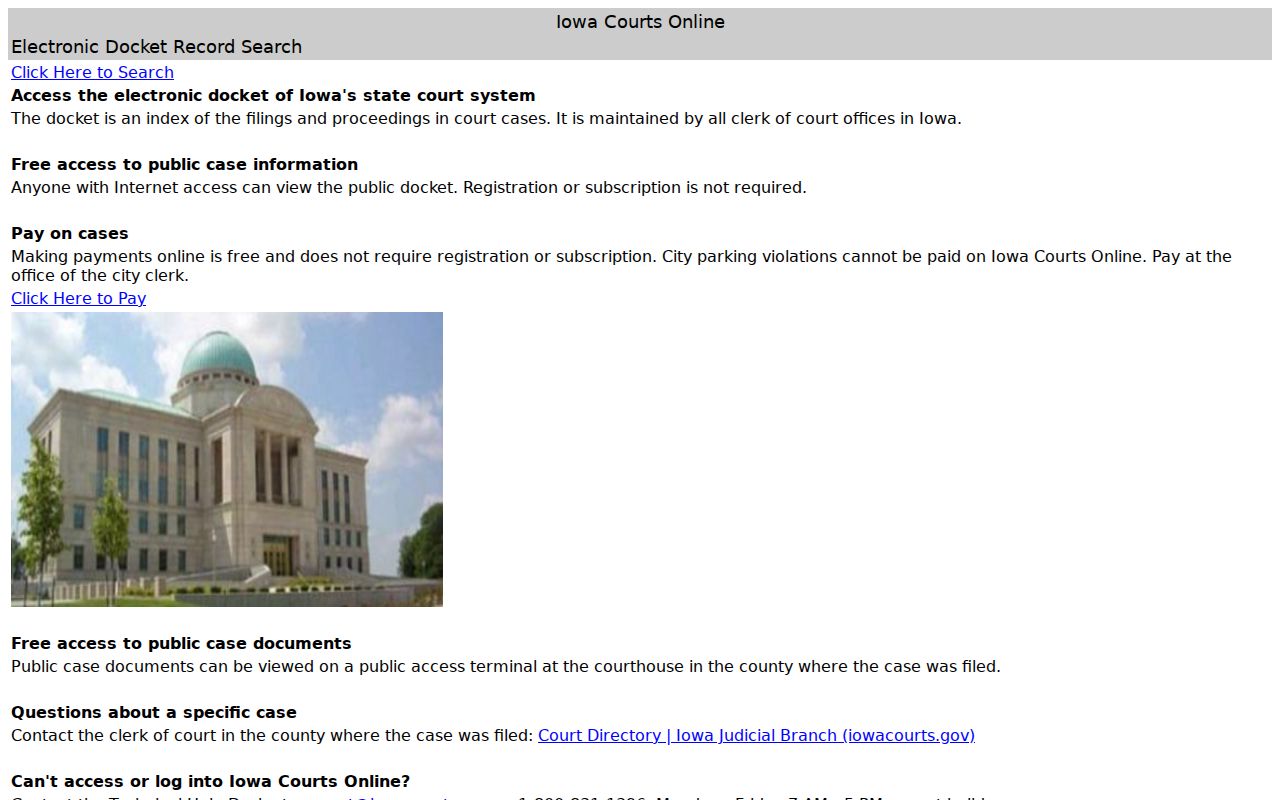
The image helps identify the official state portal before a reader enters a name or case number.
Scott County Case Record Searches
Use a narrow search, confirm the court and timing, and then read the whole register. A caption alone cannot show whether every count ended the same way. The following path works for both a known Scott County criminal case and a name-based search.
- Open Iowa Courts Online through the Judicial Branch route and choose the public search.
- Enter the case number when known. Otherwise search a party name and choose Scott County.
- Compare the middle name, case timing, and charge context without copying protected identity data.
- Read each count and docket event in date order, from filing through judgment or later review.
- Ask the Clerk for a certified copy, an entitled protected document, or a file that predates online coverage.
Call the Associate Court Clerk traffic and criminal line at 563-326-8787 when a result is hard to match. The general clerk line is 563-326-8647. Current Scott-specific copy and certification charges were not found in the official research, so ask the Clerk for the cost before placing an order.
Note: A public docket entry can exist even when its underlying PDF is not available to an anonymous user.
Read Scott County Criminal Case Codes
Iowa case numbers often carry a type code. FECR identifies a felony criminal case. AGCR marks an aggravated misdemeanor criminal case, while SRCR refers to a serious misdemeanor criminal case. The code is a useful route into the Scott County docket, but the live charge rows give the more precise account. Counts can be added, amended, reduced, dismissed, or resolved in different ways.
- Trial information
- The Iowa prosecutor's formal charging paper for an indictable offense.
- Arraignment
- The court event where charges and a plea are addressed.
- Disposition
- The recorded result for a count or case, such as dismissal, acquittal, or conviction.
- Deferred judgment
- An Iowa result that delays judgment while court conditions are completed.
- Mittimus
- A court direction that commits a person to custody.
A Scott County court case lookup should follow each count through the disposition and sentence. A dismissed count beside a conviction does not make the full case a dismissal. Likewise, the first offense in the caption may not reflect the final judgment.
What a Criminal Case File Contains
The Scott County court record is built around a case number, court events, filings, rulings, and financial entries. It differs from the fingerprint-linked DCI rap sheet and the jail's short custody view. Use the docket when the key question is what prosecutors filed, what the judge ordered, or how a criminal count ended.
| Case Number & Court | Identifies the Scott County file, standardized case type, and judicial assignment. |
|---|---|
| Charging Document | Shows the complaint, trial information, indictment if used, and filed counts. |
| Docket Entries | Lists motions, orders, pleas, hearings, and later review in date order. |
| Hearing Dates | Tracks scheduled and completed court events. |
| Disposition & Judgment | States how each count ended and whether guilt was established. |
| Sentence & Conditions | Records confinement, probation, costs, restitution, and other ordered terms where public. |
Parties, attorneys, charge citations, case status, balances, and payment entries may also appear. Birth dates, Social Security numbers, victim or minor data, confidential evaluations, and expunged files are restricted. For a broader explanation of how the filed case differs from custody data, compare the county's arrest search channels.
Scott Court Files Before 1998
The official Iowa Courts Online guide states that cases filed before 1998 may require the county clerk. If a sound name search finds nothing, do not treat the empty screen as proof that no older Scott County case exists. Call first, give the clerk a useful date range and likely name spelling, and ask whether an index or stored file can be checked. A case number makes that request much faster.
The public uses the first and second-floor Clerk counters at the Scott County Courthouse. Weekday building hours are 8:00 a.m. to 4:30 p.m. Visitors pass security and should leave phones and other electronic communication devices in the car under the courthouse administrative order. These rules can affect how a reader plans to take notes or retrieve a case file.
The Clerk's official contact page is the source for the local counter and criminal-floor information.
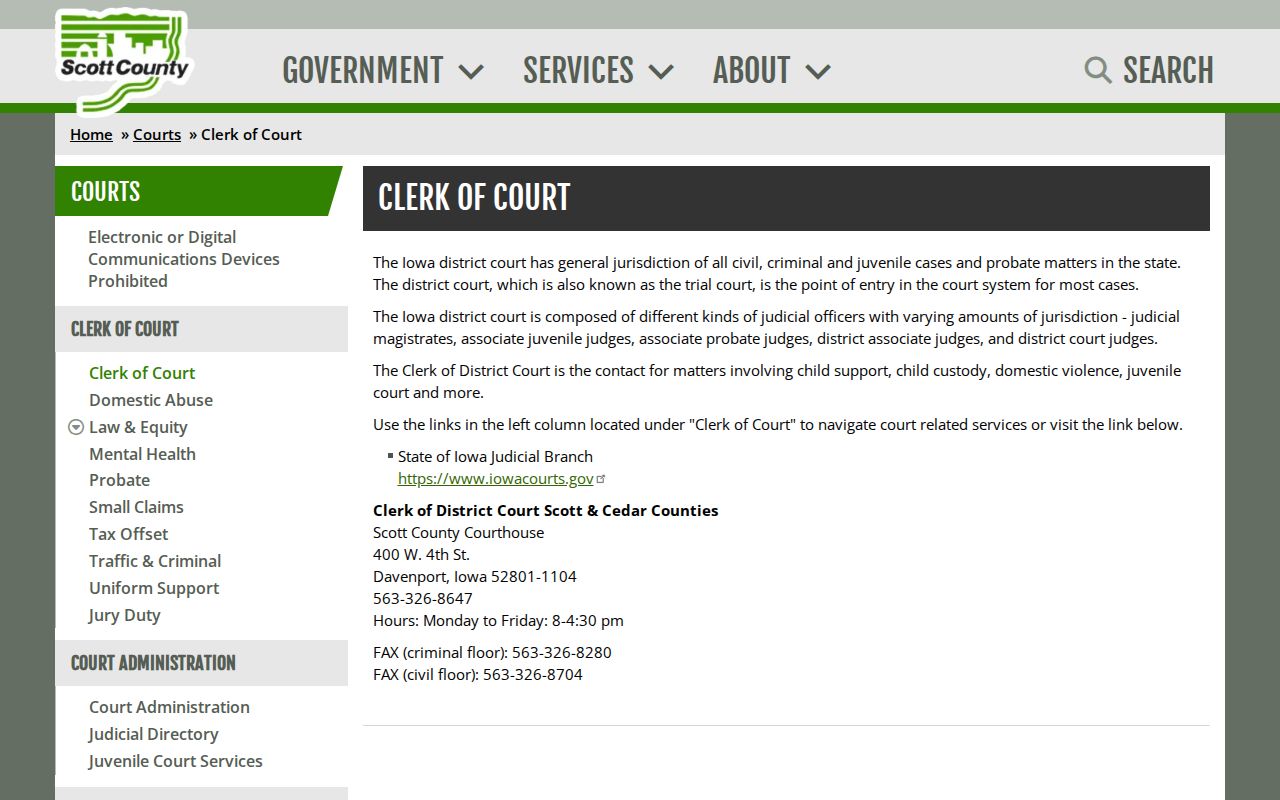
The captured page points older-file and certified-copy questions to the actual Scott County record custodian.
Criminal Case Stages in Scott County
A Scott County criminal docket starts only after court action begins. Police may first create an arrest or citation record. At initial appearance, a judicial officer addresses the charge, rights, counsel, custody, and release. The County Attorney then controls the formal prosecution and commonly files a trial information for an indictable offense unless an indictment is used.
Case flow: Charges Filed › Arraignment › Pretrial › Plea or Trial › Disposition › Sentencing
Pretrial events can include motions, discovery disputes, status conferences, or plea proceedings. Judgment and sentence supply the result that matters most when a Scott County court record is read as criminal history. An appeal creates a linked appellate trail. Probation violation action may add later events long after the original sentence.
Note: The filed charge can differ from the arrest allegation because the prosecutor reviews the facts before court filing.
Scott Cases in State or Federal Court
Iowa Courts Online does not contain federal cases. Scott County lies in the Southern District of Iowa, whose Davenport Division courthouse is at 131 East Fourth Street. Search a federal party name or case number through PACER. Registration is required, and readers should confirm the current usage fees and quarterly waiver rules on PACER's own fee page. The Southern District of Iowa maintains the official federal court information shown in the first source image. Federal custody belongs in the Bureau of Prisons locator, not the Scott County roster.
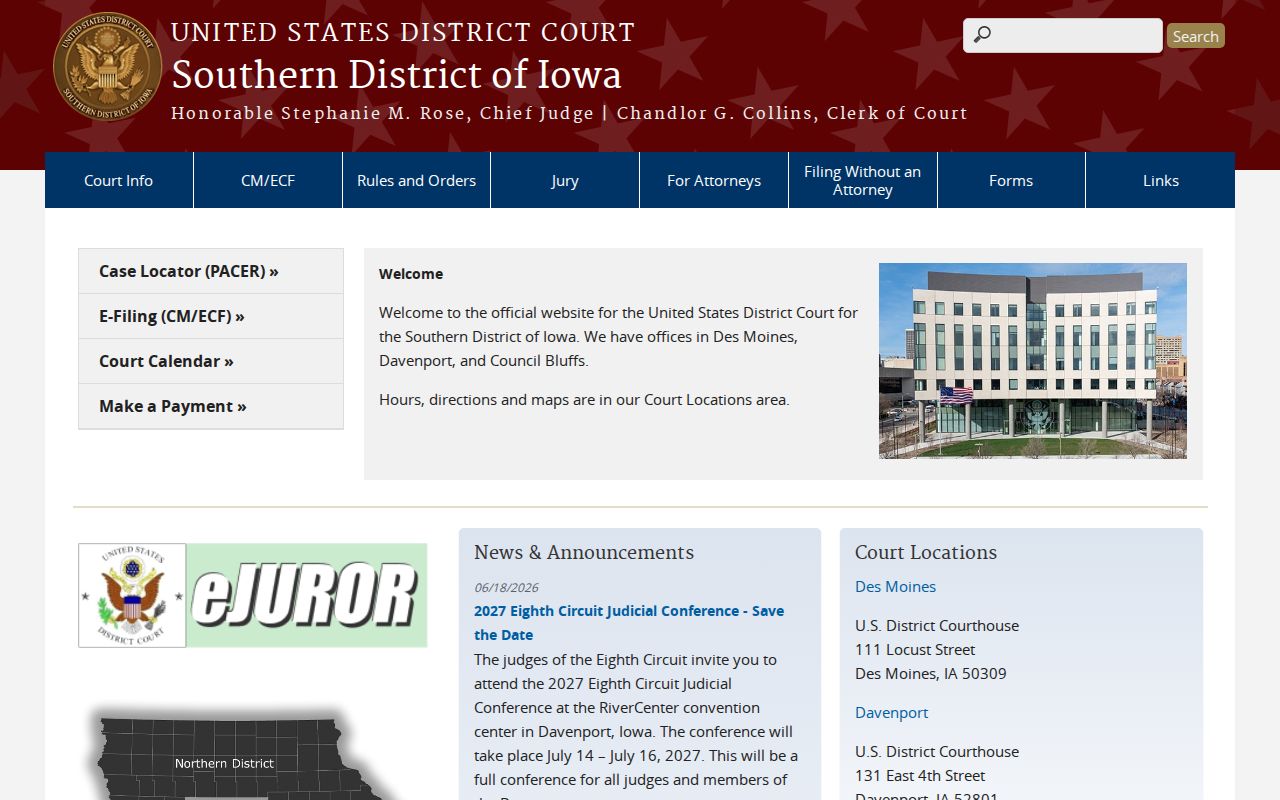
That source confirms the separate federal layer for Davenport-area cases.
PACER's official site is the source for the second captured court-search image.
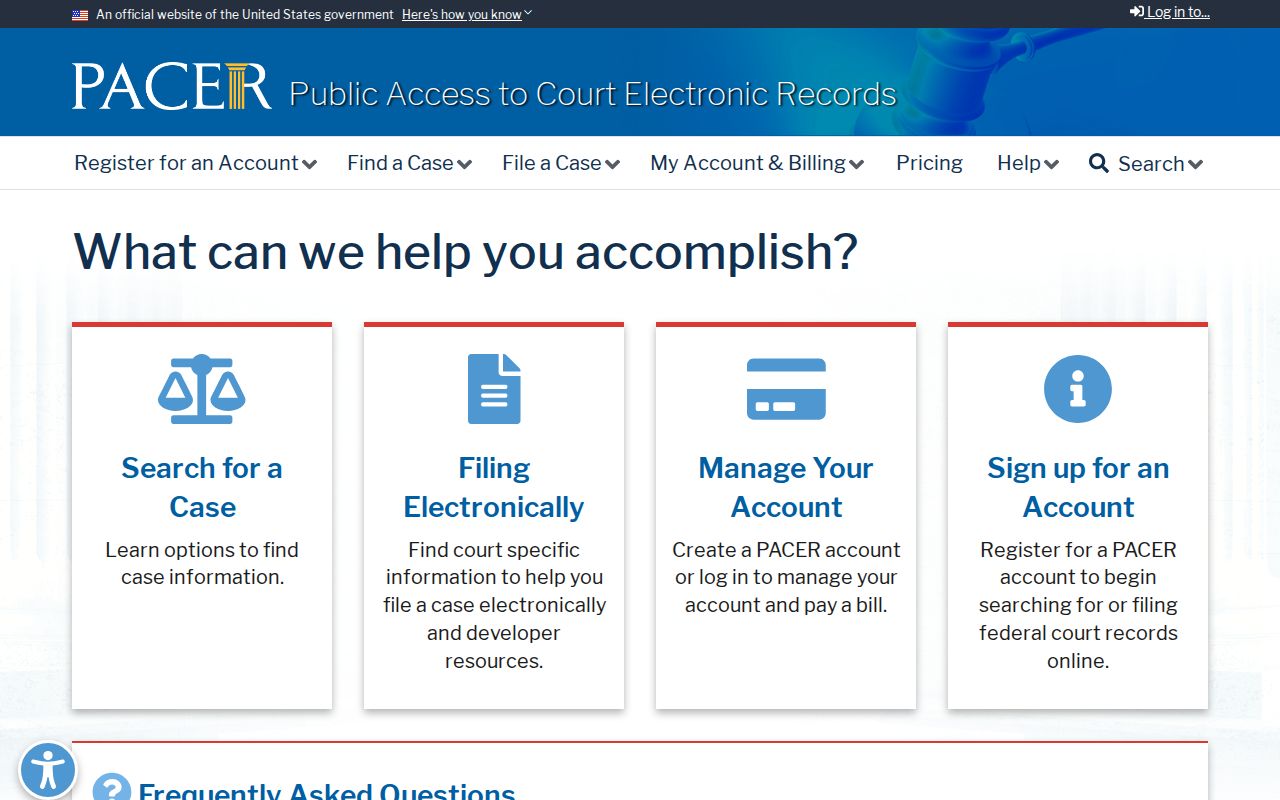
The PACER view marks the correct docket system when a Scott County case was filed in federal court rather than Iowa District Court.
Who Hears Scott Criminal Cases
Judge titles explain jurisdiction, not separate record systems. District judges hear felonies and hold general authority. District associate judges commonly handle aggravated and serious misdemeanors and assigned parts of felony matters. Magistrates conduct many initial appearances, simple misdemeanor cases, and preliminary proceedings. The Scott County Clerk keeps the resulting files in the same unified district court structure.
Iowa offense class helps identify likely jurisdiction. The current Iowa criminal-law index organizes the controlling chapters. Class A through D felonies proceed in District Court under Iowa Code chapter 902. Aggravated, serious, and simple misdemeanors have distinct limits under chapter 903. A short Scott County roster label such as F or M is not enough to determine the exact filed level. Scott County readers should open the charge row and read the citation, description, status, and outcome. Current indigent-defense office information comes from the Iowa State Public Defender, while appointment occurs through the court case.
Access Rules for Case Records
Public access does not mean that every paper is online. Iowa Code chapter 22 provides examination and copy rights while §22.7 lists confidential records. Iowa Court Rules chapter 16 and Judicial Branch policy govern electronic filing and public views. Protected identifiers, juvenile matters, victim and minor data, confidential evaluations, and qualifying expunged records do not appear like open Scott County docket material.
A missing document can mean the PDF is not open to anonymous users, the file predates online coverage, or the record is confidential. Ask the Clerk which rule applies.
Iowa Code chapter 901C makes qualifying dismissed, acquitted, or limited conviction records confidential after the required court order. The order does not mean every government trace is destroyed. If an ordinary Scott County search no longer shows a case, the subject can obtain the exact order and check with the Clerk rather than infer what occurred from an empty result.